Tier 1 Versus Tier 3 Technical Institutions: What's the Real Difference?

Dr. G. Suryanarayana
May 20, 2026
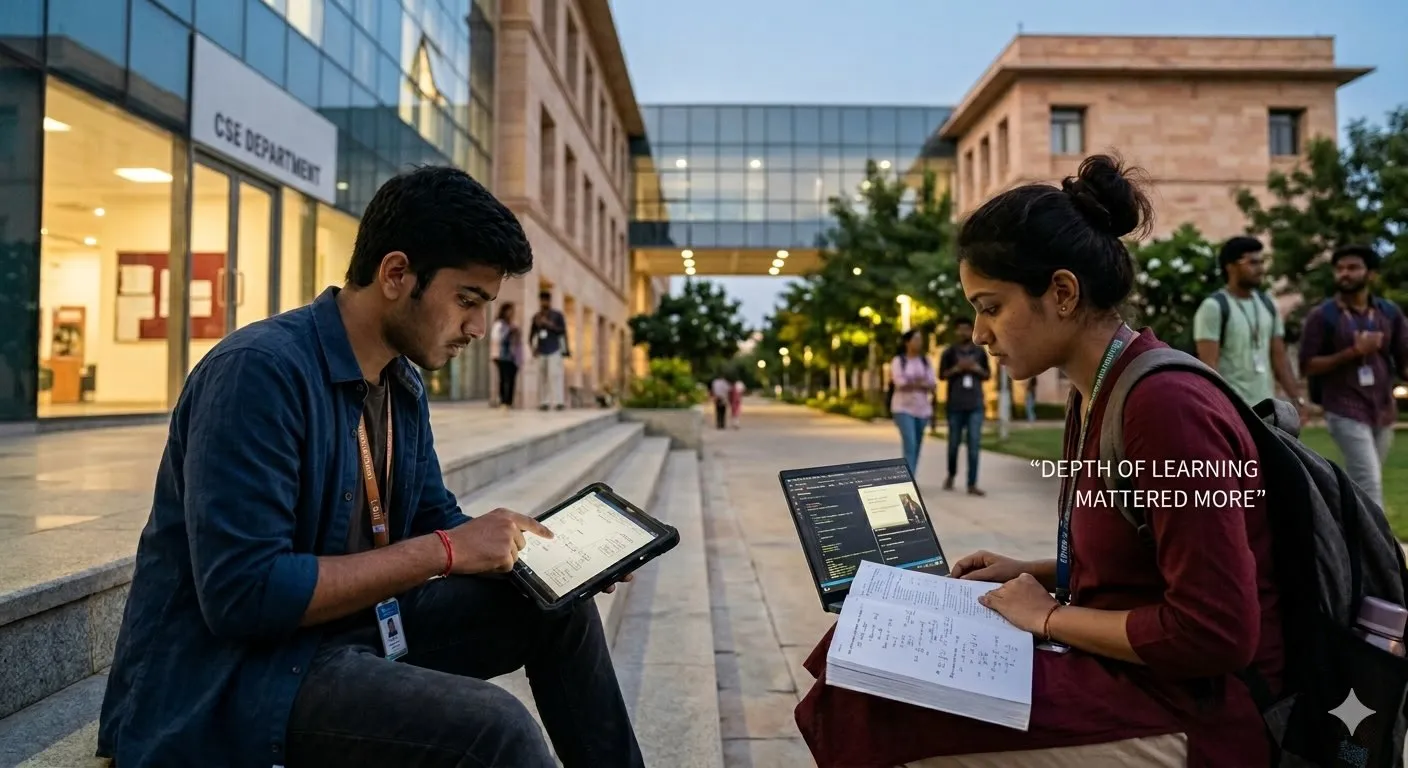
Thousands of students and parents in India get caught in one huge argument every year: Does going to Tier 1 schools lead to success? And on the other side: Is it possible to achieve an extraordinary career at a Tier 3 College? The answer is not as simple as the size of the campus, rankings, and social media prestige.
“The quality of your future is shaped less by the name of your college and more by the depth of your learning.”
As technical education is an evolving field today, Artificial Intelligence, online learning platforms, global certifications, internships, startups, and skill-based hiring become the real-time buzzwords. The reputation of the institutions still matters but is not the only criteria that determines a student’s future. Here we look beyond the labels to delve into the truth about Tier 1 and Tier 3 institutions.
Step 1: Comprehending the Variance
What is a Tier 1 Institution?
Typically, Tier 1 colleges are well-known institutions that have:
- Competitive admissions
- Strong academic infrastructure
- Experienced faculty
- Better research funding
- Strong industry connections
- Higher placement packages
These can range from leading institutes such as the Indian Institutes of Technology (IITs), the National Institutes of Technology (NITs), and other reputed universities. Such institutions tend to bring in top-notch students and recruiters from all over the world.
What is a Tier 3 Institution?
Tier 3 institutions typically are colleges with:
- Moderate or low admission competition
- Limited industry exposure
- Basic infrastructure
- Variable teaching quality
- Fewer placement opportunities
But there are a lot of tier 3 colleges which provide students with access to laboratories and opportunities to work on their own. The worst circulated myth is that a Tier 3 student is not able to succeed. In fact, knowledge, flexibility, communication, and problem solving are more valued these days in the job market.
Step 2: The Real Benefits of Tier 1 Institutions
Exposure and Ecosystem
The one area that Tier 1 institutions excel is environment. Students are surrounded by:
- High-achieving peers
- Research culture
- Competitive coding communities
- Hackathons and Innovation Labs
- International collaborations
- Startup ecosystems
It is a setting that encourages students to strive for excellence.
Better Industry Access
Top recruiters visit Tier 1 campuses first because:
- The institutions already hold good brand value.
- The alumni networks have a powerful influence.
- Businesses are confident that training is of high quality.
Consequently, students will be able to access more easily:
- Internships
- Research projects
- International opportunities
- High-paying placements
This first exposure can create an accelerated pathway to career paths.
Step 3: The Dormant Challenges Within Tier 1 Institutions
While Tier 1 institutions have their benefits, they aren’t always success machines. Some students find it difficult to cope with:
- Extreme academic pressure
- Comparison culture
- Mental burnout
- Fear of failure
- Identity crises
Furthermore, some students tend to depend completely on the reputation of the institution alone and have no experience of real-world experiences.
A good college can just open the door but with consistent performance, the door remains open.
Step 4: The Untapped Strength of Tier 3 Institutions
The defining asset of a Tier 3 environment is the ability to build independently of any other power source. Opportunities aren’t automatically given to students at Tier 3 institutions, which can make them more adept at self-learning.
This environment can actively foster:
- Greater resilience
- Independent thinking
- Entrepreneurial mindset
- Better adaptability
Democratization of Education
Students can now easily access:
- Global online courses
- Coding bootcamps
- AI tools
- Open-source projects
- International certifications
- Freelancing platforms
Any motivated student with internet access can learn with world-class educators, irrespective of the tier of the college.
The Evolution of Skill-Based Hiring
Countless recruiters have now recognized that talent is everywhere. There have been a few engineers, entrepreneurs, and creators from lesser-known institutions who have risen to success purely by self-discipline and continuous learning.
Step 5: What Parents Must Understand
Parents tend to feel anxious when their child isn’t in a Tier 1 school. It is vital to remember that success is not a one-shot deal; it’s not just a single exam or college admission.
- Avoid Comparisons: It is important to avoid comparisons with others that are always happening. Pressure destroys confidence.
- Confidence Over Tiers: A typical Tier 3 student can perform better than a typical Tier 1 student if they are confident.
- Guidance Builds Growth: Parents should ensure that they are actively involved in:
- Encouraging skill development
- Supporting emotional well-being
- Encouraging internships and certification
- Supporting the specific interests of students
Step 6: Technical Education’s Future
The changes in the education landscape are fast-paced due to:
- Artificial Intelligence
- Remote work
- Online certifications
- Global hiring
- Startup culture
- Hybrid learning ecosystems
Companies increasingly value:
- What students can build
- How quickly they learn
- How effectively they communicate
- How creatively they solve problems
Institutional reputation still matters but, at the same time, its dominance is slowly observed to be reduced. The future belongs to adaptive learners, not just prestigious graduates.
Final Thoughts
The exposure, networking, advanced infrastructure, and access to industry are clearly better at Tier 1 institutions, which offers students a strong head start in the beginning of their career. But they’re not the only way to one’s career or self-development.
While many times less known or prestigious, Tier 3 institutions have the potential to develop students who could be described as resilient, hardworking, adaptable, and self-motivated. These students learn to develop opportunities for themselves, to have some good problem-solving skills, and to develop success through persistence and continual learning.
Today, more than ever, the will to learn, the ability to learn, the ability to communicate, and the ability to adapt are more important than the institution that issued a degree.
Careers are developed through:
- Continuous learning
- Real skills
- Strong communication
- Practical experience
- Professional attitude
- Persistence
Students should refrain from asking:
“At what level is my college?”
Rather, they should ask:
“Who am I becoming, during my college days?”
In the long run, the school can introduce you to the world, but you will be responsible for your own future. Success or failure depends entirely on your skills, mindset, and character.
Dr. G. Suryanarayana
Dr. G. Suryanarayana received his Ph.D. in Computer Science and Engineering from Jawaharlal Nehru Technological University Hyderabad in 2019. With over 18 years of teaching experience and 13 years of research experience, he has published 67 research papers in reputed SCIE and Scopus-indexed journals, authored three books, edited a book chapter on drone technology, and filed six patents along with two copyrights.